What are Commercial Chillers and Freezers?
A commercial chiller holds food between 0°C and 5°C for short-term storage of fresh items like dairy, produce, and beverages. A commercial freezer holds -18°C to -25°C for long-term storage of frozen meat, seafood, and ice cream. Blast chillers are a third category, rapidly cooling hot food from around 70°C to 3°C within about 90 minutes to keep it out of the food-safety “danger zone.” Most F&B operations in Malaysia need at least one chiller and one freezer — and many benefit from a combination unit or both.
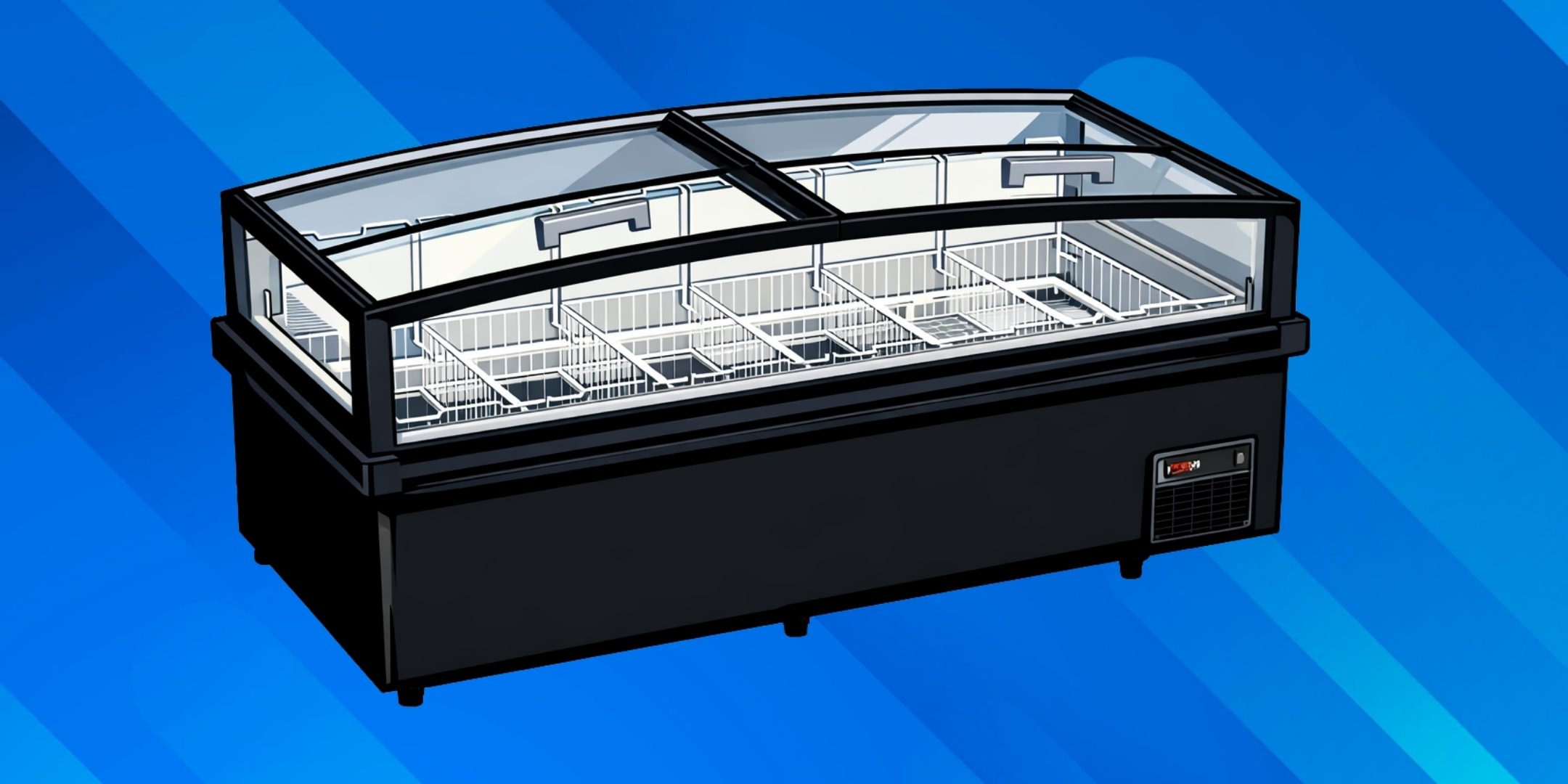
Premium Display Chiller
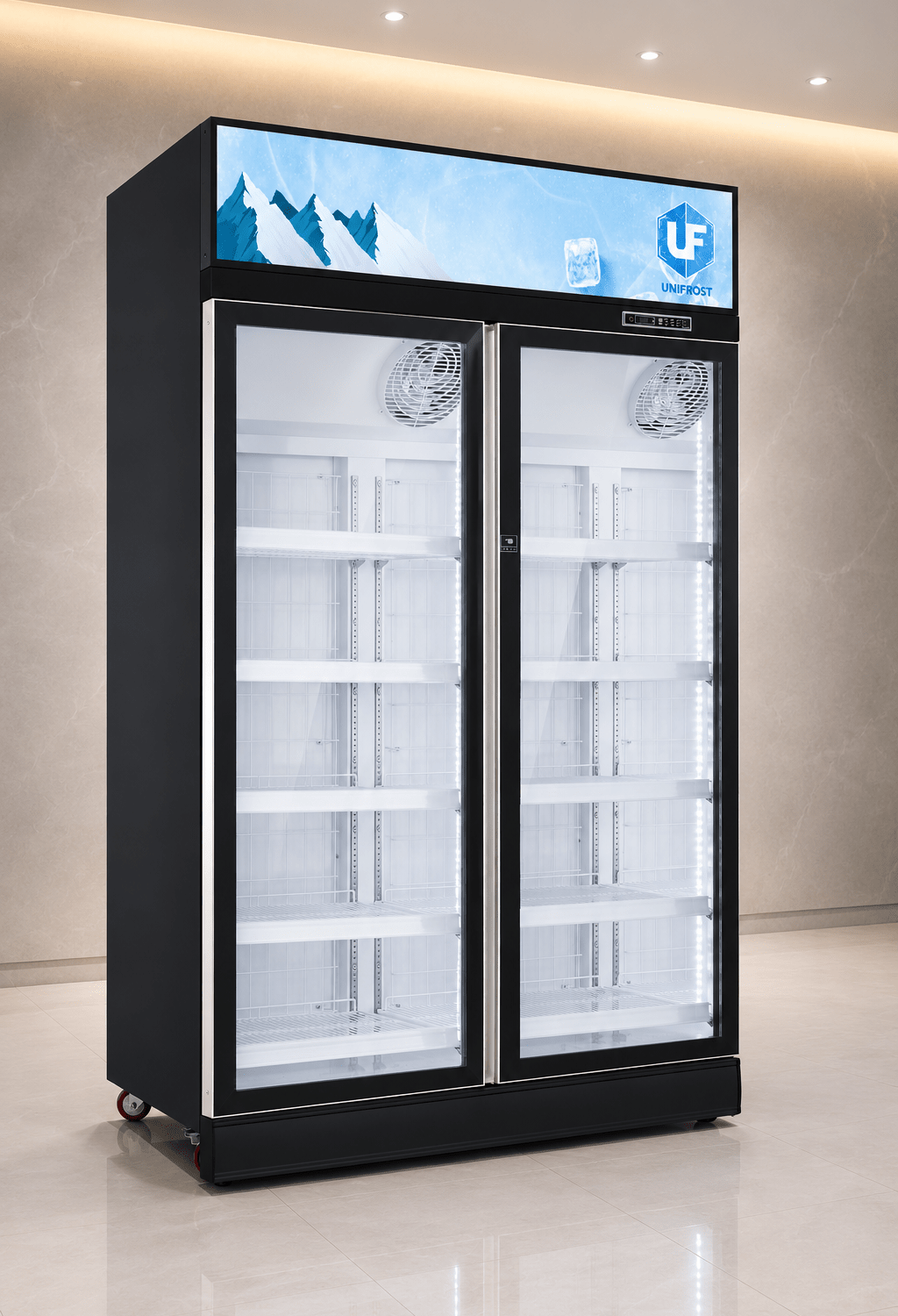
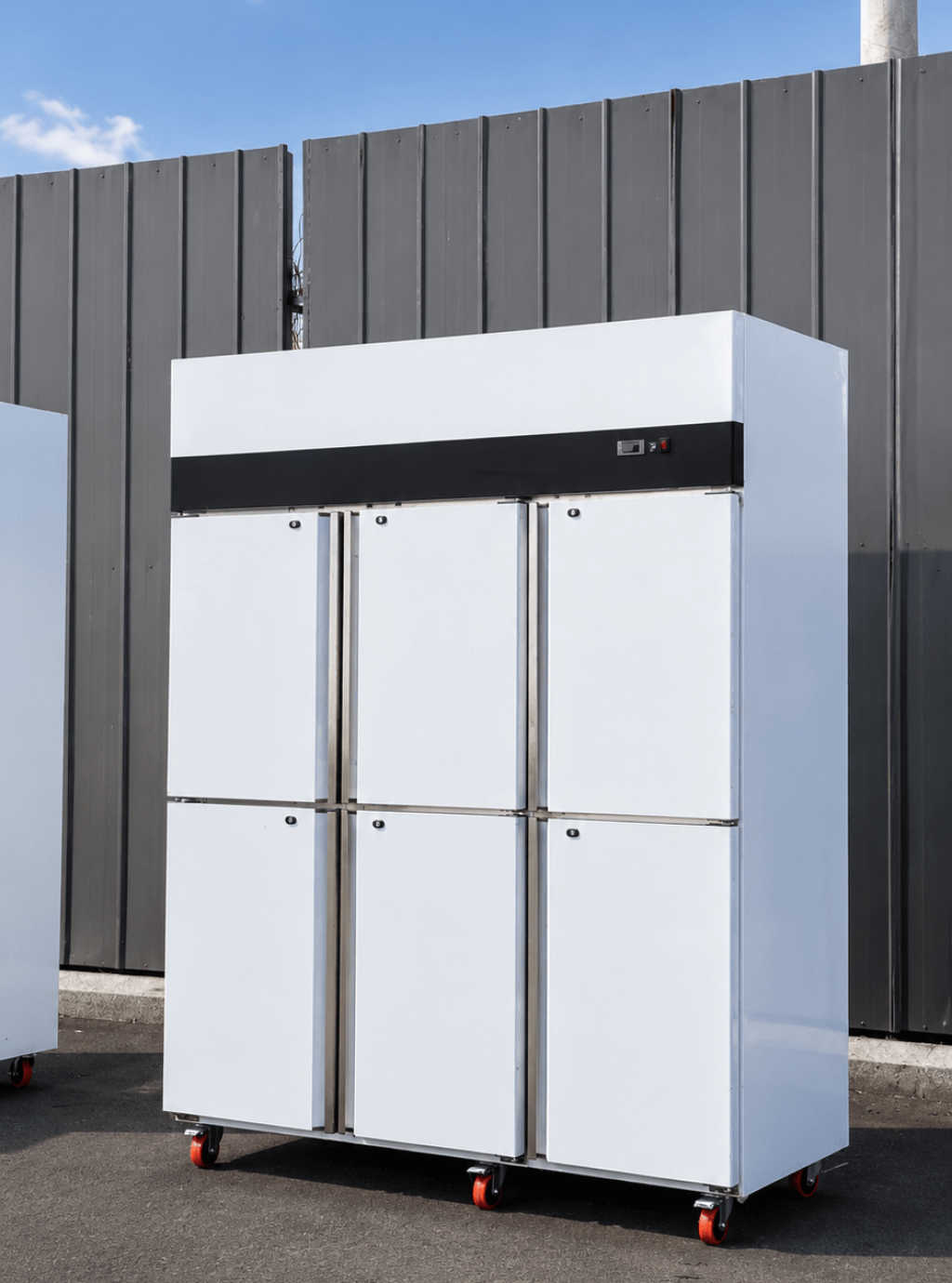
Stainless Steel Upright Freezer
Chiller vs Freezer Temperature Range: The Core Difference
A chiller’s job is to slow bacterial growth without freezing the product — that’s why dairy, fresh herbs, and drinks stay in a chiller rather than a freezer, which would damage their texture. A freezer’s job is to stop microbial activity almost entirely for extended storage. Blast chillers solve a different problem: they exist to move hot cooked food through the 60°C–5°C “danger zone” quickly, which standard chillers and freezers aren’t built to do.
| Commercial Chiller | Commercial Freezer | Blast Chiller | |
|---|---|---|---|
| Operating temperature | 0°C to 5°C (some display units up to 8–10°C) | -18°C to -25°C | Rapidly drops food from ~70°C to ~3°C |
| Storage duration | Short to medium-term (days) | Long-term (weeks to months) | Not for storage — pre-cooling step before chilling/freezing |
| Typical contents | Dairy, fresh produce, beverages, cut flowers, deli items | Frozen meat, seafood, ice cream, bulk stock, some pharmaceuticals | Cooked food, soups, sauces awaiting safe storage |
| Common formats | Reach-in, upright display, multideck open chiller | Chest freezer, upright freezer, walk-in freezer room | Countertop or cabinet blast chiller units |
What’s Different in the Construction: Insulation, Compressors & Seals
Freezers need thicker, high-density polyurethane insulation panels, heavy-duty door seals (often heated to prevent ice buildup), and stronger compressors capable of sustaining sub-zero output continuously.
Chillers use lighter insulation and smaller compressors, since they’re only working to maintain temperatures a few degrees above freezing.
Across both, inverter-driven compressors are increasingly standard — they adjust cooling output based on real-time demand rather than running at full power constantly, which matters in Malaysia’s heat and humidity where compressors already work harder than in temperate climates.
Energy Consumption: Which Costs More to Run?
Freezers consume more electricity than chillers of a similar size, for two reasons: the larger temperature gap between the unit and the surrounding kitchen means the compressor runs longer and harder, and defrost cycles (used to clear ice buildup) add additional energy draw. Chillers, operating closer to ambient kitchen temperature, cycle less frequently and place less continuous load on the compressor.
For budgeting purposes, this means:
- Freezers have higher running costs per unit of storage volume than chillers.
- A business storing the same volume of stock can often reduce overall energy spend by keeping bulk inventory in a freezer (efficient for long-term, low-access storage) and using chillers for high-turnover, frequently accessed items.
Maintenance: What Each Unit Actually Needs
Freezers require periodic defrosting (manual or automatic), regular door seal/gasket inspection to prevent ice buildup at the seams, and compressor checks — chest freezers are generally the lowest-maintenance freezer format.
Chillers need coil cleaning to maintain airflow, gasket checks for cold air leakage, and temperature calibration checks — chillers are typically cheaper and simpler to maintain than freezers of equivalent size.
In Malaysia’s climate, both unit types benefit from more frequent gasket and seal inspections than the same equipment would need in a temperate country, since humidity accelerates seal degradation and condensation buildup.
Which One Does Your Business Need?
| Business Type | Likely Need |
|---|---|
| Café, bar, florist | Chiller(s) — fast-turnover, fresh goods |
| Butchery, seafood retailer, ice cream parlour | Freezer(s) — bulk frozen storage |
| Restaurant, central kitchen | Both — fresh prep stock in chillers, bulk/backup in freezers |
| Convenience store, minimart | Chiller for drinks/dairy + freezer for frozen snacks/ice cream, often a combination chiller-freezer unit |
| Catering, banquet kitchen | Chiller + blast chiller, to cool large hot batches safely before storage |
5-Step Decision Framework
- Map your stock by temperature need — separate items that must stay above 0°C from those that must stay frozen.
- Estimate turnover speed — fast-moving stock suits chillers; bulk/reserve stock suits freezers.
- Check whether you cook large batches — if yes, a blast chiller protects food safety during cooling.
- Factor in running costs, not just purchase price — freezers cost more to operate long-term.
- Plan the layout — chillers near prep stations for quick access, freezers in backroom/storage zones.
Frequently Asked Questions
What is the temperature difference between a chiller and a freezer?
A commercial chiller typically runs at 0°C to 5°C, while a commercial freezer runs at -18°C to -25°C. The chiller keeps food cold without freezing it; the freezer keeps food frozen for long-term storage.
Can one unit work as both a chiller and a freezer?
Yes — combination chiller-freezer units exist, with separate compartments independently controlled to different temperature ranges. These are common in minimarts and small F&B outlets with limited floor space.
Which uses more electricity, a chiller or a freezer?
A freezer typically uses more electricity than a chiller of similar size, because it must maintain a much lower temperature and run defrost cycles, both of which increase compressor workload.
How long can food be stored in a chiller versus a freezer?
Chillers are designed for short to medium-term storage (typically days), suited to perishables with shorter shelf lives. Freezers are designed for long-term storage (weeks to months), suited to items that need extended preservation.
What is a blast chiller and do I need one?
A blast chiller rapidly cools hot cooked food — from roughly 70°C down to 3°C within about 90 minutes — to move it safely through the food-safety danger zone. It’s most relevant for kitchens that prepare food in large batches ahead of service, such as catering operations and central kitchens.
Talk to Unifrost About Energy-Efficient Refrigeration
Whether you’re trying to bring down the electricity bill on your current chillers and freezers, or planning equipment for a new outlet, Unifrost’s team can help you weigh up compressor type, refrigerant, and placement for your specific kitchen or retail layout. We supply, install, and service commercial and retail refrigeration equipment across Malaysia, with after-sales support to keep units running efficiently through the hot months.
Browse our commercial refrigeration range or get in touch for advice on the right setup for your business.