How Malaysia’s Heat Raises Your Fridge’s Energy Bill
Malaysia’s high ambient temperature and humidity — daytime highs of 32–33°C and humidity often above 75% — force your commercial refrigeration equipment’s compressor to work longer and harder to remove heat, directly increasing your electricity bill. This applies across the board: chillers, freezers, and retail refrigeration units all feel the same effect, from a single reach-in chiller in a café to a full display line in a minimart. Inverter (variable-speed) compressors address this by adjusting cooling output to actual demand instead of cycling fully on and off. Compressor manufacturers report energy savings of roughly 15–40% versus standard fixed-speed compressors in equivalent units, with the largest gains showing up precisely in hot, high-load conditions like a Malaysian commercial kitchen in June.
Why Malaysia’s Heat and Humidity Push Your Compressor Harder
Every commercial refrigeration unit — whether it’s a chiller, a freezer, or a retail refrigeration display case — works by moving heat from inside the cabinet to the surrounding air. The bigger the gap between the inside temperature and the outside (ambient) temperature, the more work the compressor has to do to maintain that gap — and the more electricity it consumes.
In temperate countries, ambient kitchen temperatures might sit around 20–22°C for much of the year. In Malaysia, June daytime highs typically reach 32–33°C in cities like Kuala Lumpur, Penang, and Johor Bahru, with humidity frequently between 75% and 89%. That’s a significantly larger temperature gap for your compressor to overcome, every single hour of the day, all year round — not just during a “heatwave,” but as the baseline operating condition.
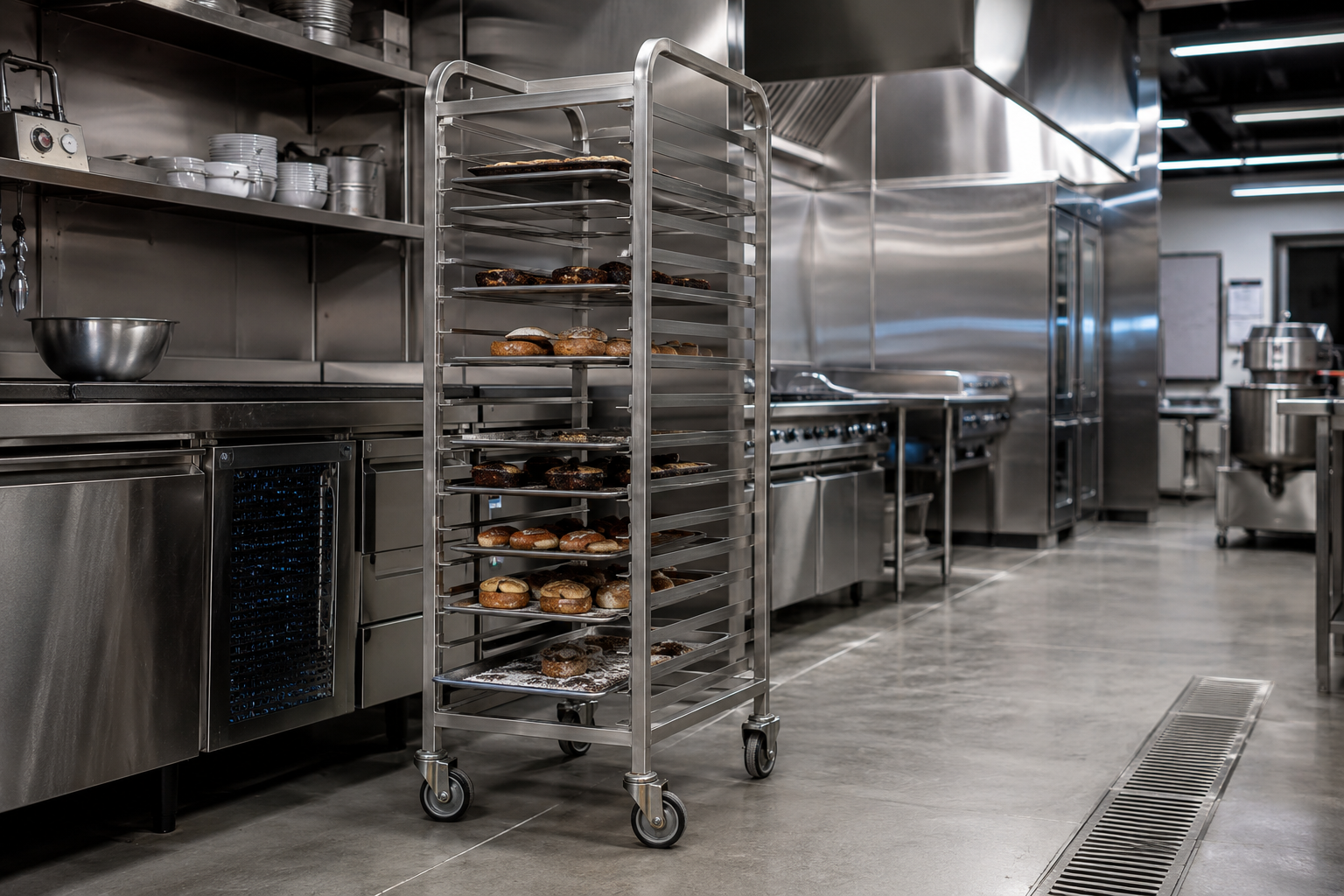
Humidity adds a second layer of strain. Moist air carries more heat energy than dry air, so condenser coils have to reject more heat for the same temperature drop. In a busy kitchen, this combines with heat from cooking equipment, frequent door openings, and crowded storage — all of which push the compressor to run longer cycles, more frequently, just to hold the same setpoint.
This is also why two identical fridge models can have very different real-world running costs depending on where they’re installed: a unit placed in an air-conditioned back office will use noticeably less energy than the same unit placed next to a stove line or near a loading bay door that’s constantly opening.
How Much More Does a Commercial Fridge Cost to Run in Hot Weather?
Every commercial refrigeration unit — whether it’s a chiller, a freezer, or a retail refrigeration display case — works by moving heat from inside the cabinet to the surrounding air. The bigger the gap between the inside temperature and the outside (ambient) temperature, the more work the compressor has to do to maintain that gap — and the more electricity it consumes.
In temperate countries, ambient kitchen temperatures might sit around 20–22°C for much of the year. In Malaysia, June daytime highs typically reach 32–33°C in cities like Kuala Lumpur, Penang, and Johor Bahru, with humidity frequently between 75% and 89%. That’s a significantly larger temperature gap for your compressor to overcome, every single hour of the day, all year round — not just during a “heatwave,” but as the baseline operating condition.
Humidity adds a second layer of strain. Moist air carries more heat energy than dry air, so condenser coils have to reject more heat for the same temperature drop. In a busy kitchen, this combines with heat from cooking equipment, frequent door openings, and crowded storage — all of which push the compressor to run longer cycles, more frequently, just to hold the same setpoint.
This is also why two identical fridge models can have very different real-world running costs depending on where they’re installed: a unit placed in an air-conditioned back office will use noticeably less energy than the same unit placed next to a stove line or near a loading bay door that’s constantly opening.
What Is an Inverter Compressor — and How Is It Different From a Standard On-Off Compressor?
A standard (fixed-speed) compressor only has two states: fully on or fully off. When the cabinet warms up past its setpoint, the compressor switches on at full power until the temperature drops back down, then switches off completely. This cycle repeats constantly, and each restart draws a surge of current.
An inverter (variable-speed) compressor can run at different speeds depending on how much cooling is actually needed at that moment. Instead of repeatedly switching fully on and off, it slows down once the cabinet is near its target temperature and speeds up when there’s a higher heat load — such as right after the door has been opened, or during a hot afternoon.
| Fixed-Speed (On-Off) Compressor | Inverter (Variable-Speed) Compressor | |
|---|---|---|
| How it runs | Full power, then off, repeating in cycles | Continuously adjusts speed to match cooling demand |
| Behaviour in hot/humid conditions | Runs more frequent, longer full-power cycles | Ramps up smoothly without repeated full-power restarts |
| Temperature stability | More fluctuation between cycles | Tighter, more consistent temperature |
| Recovery after door opening | Slower to recover, often with a power surge | Recovers faster with a smoother power draw |
| Typical energy use vs. equivalent fixed-speed unit | Baseline (100%) | Roughly 15–40% lower, with bigger gains under higher ambient loads |
| Noise | Louder during full-power cycling | Generally quieter, especially at partial load |
| Upfront cost | Lower | Higher, but often recovered through electricity savings over the equipment’s lifespan |
The key point for Malaysian operators: the energy-saving gap between the two compressor types tends to widen as ambient temperature rises. A fixed-speed compressor in a 22°C kitchen and the same unit in a 32°C kitchen will both work harder in the hotter room — but an inverter unit absorbs that extra load far more efficiently, because it’s designed to modulate rather than repeatedly hit full power.

How Much Can an Inverter Compressor Actually Save?
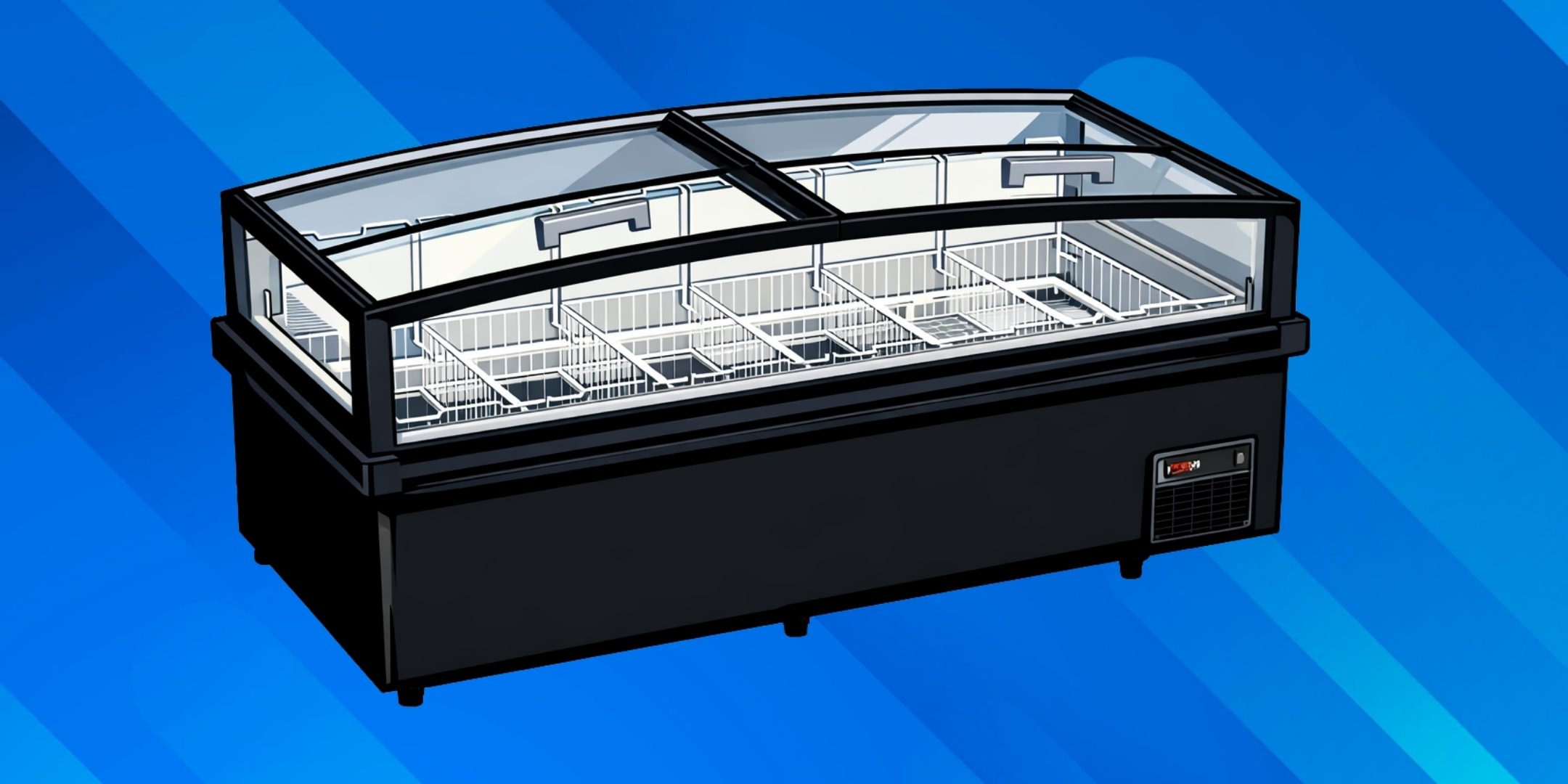
Compressor manufacturers’ case studies comparing fixed-speed and inverter compressors in equivalent refrigeration units have generally reported energy savings in the range of 15% to 40%, with one documented case showing a 38% reduction in an island freezer when switching from a high-efficiency fixed-speed compressor to an inverter compressor, tested at an ambient temperature of 25°C. These figures come from manufacturer testing rather than Malaysia-specific data, but since Malaysian kitchens regularly run several degrees hotter than that 25°C test condition, real-world savings for a unit operating in a Malaysian F&B environment could plausibly sit at the higher end of that range, particularly for units near heat sources or high-traffic doors.
For a business deciding between two similarly priced units — one fixed-speed, one inverter — the inverter unit’s higher upfront cost is typically offset over time by lower electricity bills, faster temperature recovery (which protects stock quality during busy service periods), and reduced wear from constant full-power cycling, which can extend the compressor’s working life.
Inverter Compressors + R290 Refrigerant: A Combination Worth Considering
If you’ve read our earlier guide on R290 refrigerant, you’ll know R290 (refrigerant-grade propane) is increasingly used in modern commercial refrigeration — from kitchen chillers and freezers to retail refrigeration display units — because of its efficiency and low environmental impact compared to older refrigerants.
R290 and inverter compressor technology aren’t the same thing, but they’re frequently paired in newer equipment — and they address the heat problem from two different angles. R290 improves the underlying thermodynamic efficiency of the refrigeration cycle itself, while the inverter compressor improves how that cycle is operated in response to real-world load changes. A unit combining both is generally better equipped to handle Malaysia’s combination of high ambient temperature, high humidity, and the variable load patterns of a busy F&B operation than a unit with either feature alone.
Practical Steps to Reduce Refrigeration Energy Costs This Hot Season
Whether or not you’re ready to upgrade to an inverter compressor unit, a few placement and maintenance habits make a real difference during Malaysia’s hottest months:
Keep units away from heat sources. Positioning a chiller or freezer away from stoves, ovens, and direct sun exposure (e.g., near a window or loading bay) reduces the ambient temperature the compressor has to fight against.
Check door seals and gaskets regularly. In high-humidity conditions, gaskets degrade faster — a worn seal lets warm, moist air in continuously, forcing the compressor to run far more than it should.
Ensure adequate clearance around the condenser. Commercial fridges need space around the back and sides to release heat. Units pushed against a wall or boxed in by storage will run hotter and less efficiently.
Clean condenser coils on a schedule. Dust and grease buildup on coils — common in busy kitchens — acts as insulation, making the unit work harder to release heat into the room.
Limit door-opening frequency where possible. Each opening lets warm, humid air in, which the compressor then has to remove. Organizing stock so staff spend less time with the door open reduces this load.
Frequently Asked Questions
Why does hot weather increase my commercial fridge’s electricity bill? A refrigeration unit removes heat from inside the cabinet to the surrounding air. When the surrounding (ambient) air is hotter and more humid — as it typically is in Malaysia, especially from March to August — the compressor has to work longer and harder to maintain the same internal temperature, which increases electricity consumption.
How much energy can an inverter compressor save compared to a standard compressor? Industry case studies generally show energy savings of around 15% to 40% when switching from a fixed-speed (on-off) compressor to an inverter (variable-speed) compressor in an equivalent unit, with larger savings typically seen under higher ambient temperatures and heavier usage patterns.
Is an inverter compressor worth the extra upfront cost for a small F&B business in Malaysia? For units that run 24/7 — which is standard for chillers and freezers in F&B and retail refrigeration — the higher upfront cost of an inverter compressor is often offset over time through lower electricity bills, especially given Malaysia’s consistently hot, humid climate, which keeps compressor workload elevated year-round rather than only during occasional heatwaves.
Does R290 refrigerant help with energy efficiency in hot climates? Yes. R290 is recognized for its efficiency in the refrigeration cycle and is increasingly used in modern commercial units. It addresses efficiency at the refrigerant level, while an inverter compressor addresses efficiency at the operating level — units combining both are generally well-suited to hot, humid environments.
What can I do to reduce refrigeration energy costs without buying new equipment? Position units away from heat sources and direct sunlight, ensure adequate clearance around condensers for heat release, check and replace worn door seals regularly (humidity accelerates wear), clean condenser coils on a routine schedule, and reduce how often and how long doors are left open.
Talk to Unifrost About Energy-Efficient Refrigeration
Whether you’re trying to bring down the electricity bill on your current chillers and freezers, or planning equipment for a new outlet, Unifrost’s team can help you weigh up compressor type, refrigerant, and placement for your specific kitchen or retail layout. We supply, install, and service commercial and retail refrigeration equipment across Malaysia, with after-sales support to keep units running efficiently through the hot months.
Browse our commercial refrigeration range or get in touch for advice on the right setup for your business.